
![]() |
|
Home Veg Recipes Galore Veg Kids & Teens Veg Nutrition Healthy Cooking Tips Veg Book Shop Veg Kitchen Shop Favorite Links Nava's Blogs Modern Romance Comix Dear Literary Ladies Secret Recipes for the Modern Wife A Long Way, Maybe About Nava Nava's Books Bio Press Room Contact |
Spring’s Leafy GreensWinter’s cold-hardened earth needs barely to thaw before it welcomes the leafy edible greens of spring into its fold. With a penchant for growing in cool weather, these nourishing plants provide some of the spring garden’s earliest produce. The distinct flavors of leafy vegetables such as arugula, sorrel, watercress, and others can be an invigorating treat for palates grown accustomed to the mild roots and squashes abundant in the cold season. Unlike late summer and fall greens (such as kale, collards, and Swiss chard), which need to be cooked, most spring greens are tender enough to use uncooked or very lightly steamed—all the better to showcase their clean, fresh flavors. Explore Asian greens as well, which are becoming more widely available in farm markets. Depending on the variety you may find high levels of vitamin C (as in watercress) calcium (as in fall’s dark greens kale, collards, and mustard greens). They also contain substantial amounts of potassium, vitamin A, beta carotene. Many studies have linked the nutrients found in greens to anti-cancer effects. And they add much-need fiber to the diet. Preparation TipsBuying: The more delicate the greens, the more perishable they are, so its best to buy them the same day you plan to use them, or at most, the day before. Choose greens with firm, uniform-colored leaves, with no wilted or discolored ones. Rinsing: Green leafy vegetables grow close to sandy soil, which tends to cling to the leaves. Nothing ruins a good dish like a mouthful of sand, so do wash leaves very carefully. Immersing them in a bowl of cold water for a few minutes before rinsing helps to loosen hidden grit. Stemming and chopping: Leave the stems on the small greens such as watercress and arugula. Stem spinach and Swiss chard; they have a stringy texture. On heartier greens like Kale and collards, it’s best that you remove the stems, but you can slice them thinly and team them along with the greens for a more aesthetic result. Small-leafed greens need not be chopped at all; spinach and chard can be roughly torn into bite-sized pieces or chopped after they are steamed; large-leafed greens are nice sliced into wide shreds. The Goods on the GreensArugula: Considered a “gourmet” green, arugula makes an early spring appearance (though it also grows—and is sold—into late fall). Arugula’s flavor is bold but not bitter and the uncooked leaves add zest to mixed salads, bean salads, and cold pastas. Wilted down, it adds interest to warm pastas and grain dishes. Bok Choy and other “Choys”: All are easy to use in stir-fries and soups; those with small, tender leaves can be used uncooked. Many of the varieties include the word “choy” in their name—such as choy sum (baby bok choy), dai gai choy (Chinese mustard cabbage) and tung choy (water spinach). Dandelion: The leaves of this garden “weed” also come in a cultivated variety. Their flavor is akin to chicory or curly endive—slightly bitter or tart. Small young leaves have the best flavor and texture; combine them with other greens in salad. Sorrel: This tart, lemony green can be used uncooked in small quantities in green salads, combined with milder greens, or more generously in soups. a traditional spring soup using sorrel is schav. Spinach: A nearly all-weather green, available year round, spinach arrives early in the spring garden. Though it can be used uncooked in salads, it is most versatile lightly cooked. Spinach is welcome in egg frittatas, pastas, soups, stews, curries, wraps, and savory pies. Watercress: “Peppery” best describes this small, round-leafed green. Use uncooked in salads (best combined with milder lettuces), and in sandwiches in place of lettuce—try some with egg salad, light cream cheese, or goat cheese. Watercress is wonderful in soups and briefly wilted in stir-fries. Mizuna: This cool weather green makes it a natural for early spring harvesting. Its mildly sweet and spicy leaves add flavor and crunch to mixed salads; it can also be briefly steamed or stir-fried, or used in soups. Tatsoi: These small, dark, spoon-shaped leaves have a mild flavor that’s perfect for using raw in salads or quickly wilted down in stir-fries, where it somewhat resembles spinach. Leek and Potato Soup with WatercressServes: 6 Peppery, bright green watercress adds a touch of spring to a classic soup. If you can make this the night before it’s needed, so much the better, as the flavors improve from standing overnight.
Heat the oil in a large soup pot. Add the leeks and saute over medium heat, covered, until they just begin to turn golden. Stir occasionally. Add the potatoes, bay leaf, bouillon cubes, and just enough water to cover. Bring to a simmer, then simmer gently, covered, until the potatoes are tender, about 15 to 20 minutes. Mash some of the potatoes against the side of the pot with the side of a spoon. Add the watercress and rice milk and simmer over very low heat for 10 minutes longer. Season with salt and pepper. Allow to stand off the heat for an hour or two before serving, or let cool and refrigerate overnight. Heat through before serving. Stir in the parsley. If needed, adjust the consistency with more rice milk, then adjust the seasonings. Spring Greens Salad with Endives and OrangesServes: 4 to 6
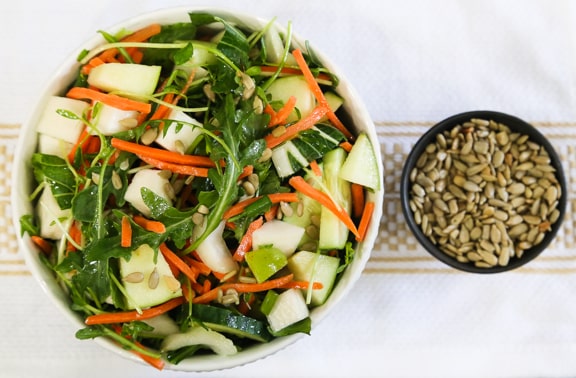
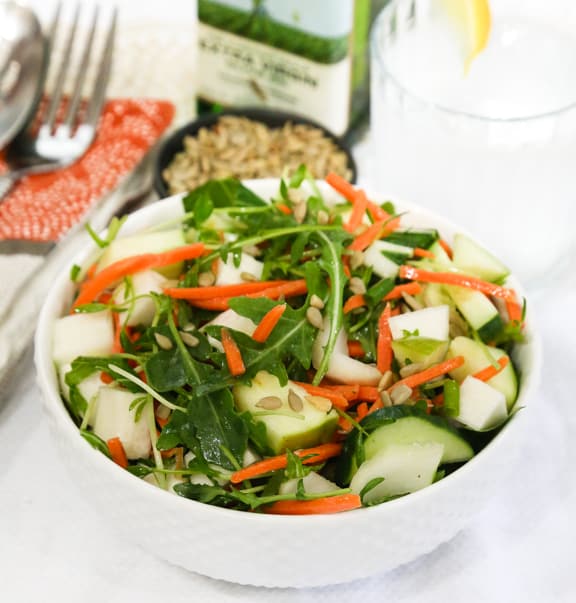
Combine all of the ingredients in a salad bowl and toss together. Serve at once. Note: Use a mild lettuce such as Boston or butter mixed with any combination of sorrel, arugula, dandelion greens, watercress, and tender Asian greens such as mizuna in small quantities. Pasta with Asparagus and ArugulaServes: 4 Mellow asparagus and bold arugula contrast nicely in this simple yet delicious pasta dish.
Cook the pasta according in plenty of rapidly simmering water until al dente, then drain. Meanwhile, trim the woody ends from the asparagus spears and scrape any tough skin with a vegetable peeler. Fresh slender spring asparagus usually needs no scraping. Cut the spears into 1 to 2-inch long pieces and set aside. Heat the oil in a small skillet and add the garlic. Saute over low heat for a minute or two or until golden. Add the asparagus and a small amount of water. Cover and steam until the asparagus is done to your liking but still bright green. Add the arugula, cover, and steam very briefly (less than a minute will do), just until the arugula wilts down slightly. Combine the pasta, asparagus arugula mixture, and dried tomatoes in a serving bowl and toss well. Season with salt and pepper and serve at once. Stir-Fried Tofu with Spring GreensServes: 4
Cut the tofu into 1/2-inch-thick slices. Blot well between clean tea-towels or several layers of paper towel, then cut into 1/2-inch dice. Heat half of the oil in a stir-fry pan or wide skillet. Add the tofu and stir-fry over medium-high heat until golden on most sides. Remove to a plate. Heat the remaining oil in the same skillet. Add the onion and saute over medium heat until golden. Add the greens and ginger and stir-fry briefly, just until leaves are wilted. Stir in the tofu dice, season to taste with soy sauce, and serve at once. Note: Use one or two Asian greens such as mizuna or tatsoi (or any other Asian greens available to you); or try a combination of spinach with arugula or watercress. |
Join Nava on Facebook Click on the cover to learn more
|
|||